Resident Life
 Life in St. Louis
St. Louis is a fantastic place to live during residency training. The greater St. Louis area is home to nearly 3 million people, and has the amenities of a vibrant metropolitan city with a small-community feel. The city is made up of distinct neighborhoods, each of which have their own unique amenities and charm. St. Louis is known for its love of professional sports, a thriving art scene, and its ever-expanding green spaces including Forest Park, which is located directly across from the Washington University School of Medicine Campus. Learn more.
Meet Our Residents
Go behind the scenes with our PM&R residents - check out their Instagram and Twitter to see what's happening in their world.
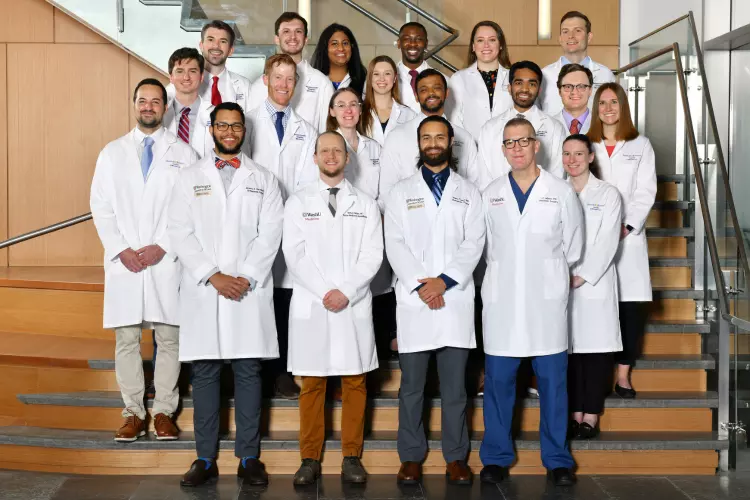
Class of 2027 (PGY-4)

Jonathan Bauer, MD
Hometown: Atlanta, Georgia
Medical School: Rush University
Subspecialty/Research Interests: Interventional Sports and Spine, MSK, Pain and adaptive sports
Outside Interests: Ultimate Frisbee, hiking, camping, skiing and scuba diving. When not outdoors, I enjoy board games, movies and my cat Luna.
What surprised you most about the program after you started?
I was pleasantly surprised by just how hands on attendings allow us to be! I was participating in fluoro-guided procedures during my first month of PGY-2 year!
How would you describe our teaching culture?
The outpatient MSK attendings are always so eager to teach and facilitate learning both through hands-on experience and clinical instruction.

Monica Bond, DO
Hometown: Strafford, Missouri
Medical School: Arkansas College of Osteopathic Medicine
Subspecialty/Research Interests: Neuromuscular medicine, spinal cord injury, amputee care/orthotics and prosthetics, and musculoskeletal medicine
Outside Interests: Trying new restaurants, traveling, spending time with my family and pets, going to the Tower Grove farmer’s market.
What surprised you most about the program after you started?
I was surprised at how many MSK procedures we were able to participate in from early on in our residency.
How would you describe our teaching culture?
Attendings at WashU have high expectations of every resident, but the atmosphere and teaching culture of our program is very collegial. I have always felt that I can speak plainly and work collaboratively with all of my attendings.

Gloria Coden, MD
Hometown: Bronx, NY
Medical School: Donald and Barbara Zucker School of Medicine at Hofstra/Northwell
Subspecialty/Research Interests: Sports
Outside Interests: Freestyle snowboarding, glass blowing, ceramics
How would you describe our teaching culture?
Amazing teaching. Tons of hands-on opportunities. Really good at graded autonomy.

Jenny Goodlin, MD
Hometown: Los Gatos, California
Medical School: Drexel University
Subspecialty/Research Interests: Currently undecided but I enjoy sports and MSKOutside Interests: I am a big foodie, I am always looking for new restaurants to try! I also enjoy hiking, travel and baking!
What surprised you most about the program after you started?
I was most surprised by the strong sense of camaraderie among the residents and the willingness of our faculty to always be approachable, supportive, and invested in our growth.
What do you wish you had known before starting residency?
I wish I had realized how incredibly diverse PM&R is. Going into residency with an open mind is so important because you never know which area of the field you'll ultimately be most passionate about.
Ashwin Leo, MD
Hometown: Dallas, Texas
Medical School: Washington University School of Medicine in St. Louis
Subspecialty/Research Interests: Sports Medicine, Interventional Spine, Digital Health, Artificial Intelligence (AI) in Medicine, Health Economics
Outside Interests: Soccer, Indian cinema, trying new restaurants, traveling, quality time with family/friends
Why WashU Medicine?
This program has a very open and collegial atmosphere that enables great communication across faculty and residents.
How would you describe our teaching culture?
The teaching culture is very hands-on and adaptable. Faculty regularly try new things and adjust their methods.
Class of 2028 (PGY-3)

Christian Bongiorno, DO
Hometown: Staten Island, NY
Medical School: Des Moines University College of Osteopathic Medicine
Subspecialty/Research Interests: Traumatic Brain Injury, Concussion, Sports Medicine
Outside Interests: Basketball, English Premier League, Rock Singing, Podcasts, Reading, Meditation, Stand-Up Comedy, Weightlifting
What surprised you most about the program after you started?
You never know how these things will wind up, and I am happy to say I am good friends with every single person in my residency class. We hang out, go to trivia, BBQ when the weather is nice, and are constantly throwing out ideas of things to do together.
What do you wish you had known before starting residency?
You are going to be fine. All of the anxiety you have before your first day of intern year is normal, we all feel it, we all go through it, and you will grow into the role. Trust the process. Reach out when you need help. Make real relationships with the people in your program and lean on each other for support. You got this.
Ashley Brantingham, MD
Hometown: Middleton, WI
Medical School: Medical College of Wisconsin
Subspecialty/Research Interests: MSK, Adaptive Sports, Interventional Spine, Ultrasound
Outside Interests: Anything outdoors (soccer, spikeball, pickleball, canoeing, etc), trying new restaurants and coffee shops, trivia and game nights, travel
Why WashU Medicine?
I was drawn to WashU for their strong musculoskeletal and interventional training. I knew I would become a well-rounded physiatrist based on the large variety of fields their previous residents decided to pursue upon graduation. I was also drawn to the city of St. Louis; I have loved growing up in the Midwest but was excited to move to a warmer state (compared to Wisconsin) and St. Louis offers so many cheap or free outdoor activities!
How would you describe our teaching culture?
Our teaching culture is not stressful or competitive; it never feels as if the attendings are trying to "trick" me with a question and do not judge me if I don't know an answer. Attendings will try to guide you to the correct answer while being supportive and also admit when they lack knowledge regarding a subject which helps contribute to a lower stress environment.
Matthew Baker, MD
Hometown: Naperville, IL
Medical School: Loyola University of Chicago- Stritch School of Medicine
Subspecialty/Research Interests: MSK/ Sports/ Spine
Outside Interests: Fitness, Board Games, Movies
What surprised you most about the program after you started?
I was pleasantly surprised by both the work-life balance and the variety of free entertainment and activities available in St. Louis. Compared to my preliminary year, I found that I had significantly more time to pursue research/ my own learning interests, explore the city, and enjoy quality time with my wife.
How would you describe our teaching culture?
On the inpatient services, teaching varies by attending. Some incorporate teaching throughout rounds, while others dedicate time afterward for more structured discussions. In the outpatient setting, faculty consistently provide educational resources that are relevant to each clinic and patient population. Residents who actively engage with these resources and seek feedback from faculty are able to maximize their educational experience.

Cody Richards, DO
Hometown: Houston, Texas
Subspecialty/Research Interests: General rehabilitation, pain, sports medicine, and palliative care
Outside Interests: Basketball, college football, playing with my cats, eating Domino's pizza, eating chips and queso
Why WashU Medicine?
WashU gives you exposure to an incredibly diverse patient population and pathology set, drawing from all over the Midwest. The program also front-loads clinical exposure; you're getting substantial inpatient and outpatient PM&R experience early on, along with real opportunities to start learning procedures from day one.
How would you describe our teaching culture?
Fast-paced but judgment-free, and deeply collaborative. People ask questions openly, admit what they don't know, and teach in the moment rather than saving feedback for formal settings.
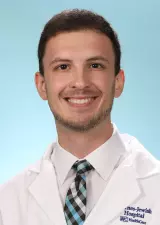
Cameron Rubino, MD
Hometown: Leonard, MI
Medical School: Wayne State University School of Medicine
Subspecialty/Research Interests:Interventional sports/spine, ultrasound
Outside interests: Detroit sports, Netflix documentaries, planning my next vacation
Why WashU Medicine?
I valued the opportunity to experience outpatient PM&R/MSK rotations early on during PGY-2 year.
What surprised you most about the program after you started?
The abundance of opportunities for leadership, research, and social events from day one.
Class of 2029 (PGY-2)
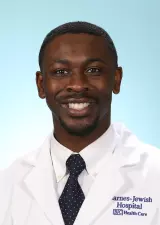
Amdiel Clement, MD
Hometown: Boyds, MD
Medical School: WashU Medicine St. Louis
Subspecialty/Research Interests: Sports medicine
Outside Interests: I enjoy cooking and hosting dinner parties, taking care of my plants and fashion. When I have the time, I love stopping by the Missouri Botanical Gardens and/or finding a good donut shop.
What surprised you most about the program after you started?
Even still, I was surprised about the flexibility within the set rotations blocks and hands on nature of the program almost immediately.
How would you describe our teaching culture?
The teaching culture is multi-faceted, and hands-on. We get concerted lecture time, along with workshop sessions. We also get to learn not only from our attendings, but also guest lectures and from one another. It’s also important to note once again, we really get the opportunity to be hands-on with a lot of help and guidance.
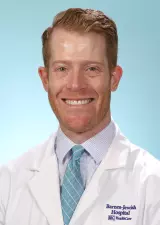
Adam Fehr, MD, PT, DPT
Hometown: Kansas City, MO
Medical School: University of Missouri-Columbia
Subspecialty/Research Interests: I enjoy everything in PM&R but changed careers with the goal of being able to offer "comprehensive" nonoperative care to patients, so my interests are primarily focused in the musculoskeletal/pain space with particular interest in management of shoulder pain/injury, spinal pain, chronic pain broadly and neuropathic pain. Outside of that, SCI and spasticity.
Outside Interests: Working out (have a large home gym), tech, travel, board games, videography/video editing, audio engineering, entrepreneurship
What surprised you most about the program after you started?
The culture and opportunities. It was very clear from the start that the focus in this program (and at the wider institution) is on trainee learning. As a medical student you hear complaints of residents being used as cogs in the machine to do "scut" that is not educational. But my experience here has not been that at all - instead the structure strongly prioritizing my learning. Going with that there have been an endless number of opportunities available to me in the program and wider campus - lectures, conferences, workshops, etc. Similarly there are research opportunities everywhere even without me actively seeking them out. Also a lot of nice unexpected benefits (large meal stipend, free starbucks, parking, etc)
How would you describe our teaching culture?
This naturally varies a lot by the attending. But if I had to generalize I would say "approachable/collaborative" - I have never felt talked down to, grilled, etc. Instead everyone approaches teaching in a kind manner.
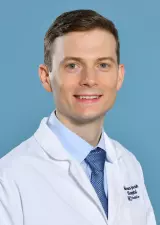
Bradley Martin
Hometown: Cranberry Twp., PA
Medical School: Lewis Katz School of Medicine at Temple University
Subspecialty/Research Interests: Cancer rehabilitation, sports medicine, adaptive sports, ultrasound, bioethics, medical education
Outside Interests: Running, tennis, coffee, reading, visiting National Parks, and Notre Dame football
How would you describe our teaching culture?
Faculty are excellent educators who are excited to teach. They meet you where you are and guide you step by step. This is especially true regarding learning procedures.
What do you wish you had known before starting residency?
You are not expected to have strong musculoskeletal or procedural knowledge right away. There is a lot to learn transitioning into PM&R, but that will come with time and experience.
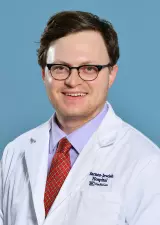
Ross Meaden
Hometown: New York City
Medical School: SUNY Upstate
Subspecialty/Research Interests: Interventional Pain and Sports Medicine
Outside Interests: Cooking, Gardening, Anime, spending quality time with my wife and cat
What surprised you most about the program after you started?
Often you get the best version of a program during interviews, but I found that the parts of the program that struck me as positive were as advertised. Also, the resident culture is very inclusive, and there appear to be a lot of events with a large percentage of each class participating.
How would you describe our teaching culture?
The teaching culture is one of constant learning not only on the resident but also the attending side. From what I have seen attendings are eager to teach whether it be clinical pearls, procedural skills or even employment/job information.
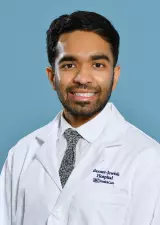
Neelay Shah
Hometown: Naperville, IL
Medical School: University of Missouri-Kansas City (UMKC) School of Medicine
Subspecialty/Research Interests: General PM&R, Musculoskeletal (MSK) Medicine, and Pain Medicine
Outside Interests: Automotive enthusiast, gaming, traveling to new cities, tennis, and getting outdoors.
Why WashU Medicine?
When I was looking at programs, WashU really stood out because it offers the perfect balance of a world-class academic powerhouse and a down-to-earth training environment. The clinical breadth here is incredible, and I knew I would get top-tier exposure to everything from complex general PM&R to high-volume musculoskeletal/pain medicine.
How would you describe our teaching culture?
The teaching culture is incredibly supportive and proactive. Education isn't an afterthought here—it’s seamlessly built into the daily workflow, where attendings prioritize hands-on mentorship and actively help you build clinical autonomy at a pace that feels both proactive and challenging.
Class of 2030 (PGY-1)
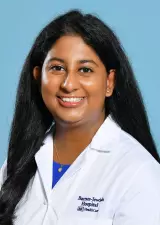
Oishi Paul
Hometown: St. Louis, MO
Medical School: University of Missouri-Kansas City
Subspecialty/Research Interests: spinal cord injury, cancer rehabilitation, pain medicine, inpatient rehabilitation, health equity, patient education
Outside Interests: Passionate foodie (cooking and trying new restaurants/coffee shops), any and all games, animals (I LOVE a good zoo), plants, performing arts, and exploring new cities!
Why WashU Medicine?
The warmth and sense of community were what initially drew me to this program. Even prior to interviewing here, every resident/faculty I had reached out to was so incredibly kind and willing to help me grow as a physiatrist trainee. The interview day itself felt very comfortable, and I really appreciated how naturally our conversations flowed. I loved seeing that the entire residency was passionate about continually improving, with a strong focus on patient care and trainee education.
What do you wish you had known before starting residency?
It is absolutely okay (and expected) to not know everything as an incoming resident. I was very nervous about first starting residency, but it's been so nice to feel the support of those both within my division, as well as those in other divisions (i.e pharmacists, therapists, SW). I've really loved the interdisciplinary approach to patient care here.
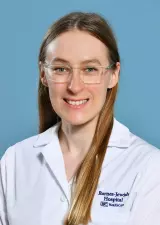
Elsa Snider
Hometown: Kirksville, MO
Medical School: ATSU-Kirksville College of Osteopathic Medicine
Subspecialty/Research Interests: I love everything in PM&R! I see many possible subspecialty pathways. I really enjoy procedural work, particularly spasticity injections; and musculoskeletal ultrasound. I am also interested in lifestyle medicine and chronic musculoskeletal pain, and I'm looking forward to learning everything I can.
Outside Interests: Rock climbing, exploring St. Louis food culture, the wonderful St. Louis Art Museum, hiking, indoor and outdoor gardening, violin, and painting or creating art.
Why WashU Medicine?
I'm very excited about the exposure to lifestyle medicine, the world-class training in sports medicine, and the extremely supportive faculty.
How would you describe our teaching culture?
WashU's teaching culture is very supportive and collaborative. Our attendings are very eager to share their knowledge and really encourage residents to feel safe to ask questions.
Apply now to join our team