Total Disc Replacement: A Motion-Preserving Alternative to Spinal Fusion
If you’ve been told you may need spinal fusion for neck or back pain, you may have another option. Total disc replacement (TDR) is an advanced surgical procedure designed to relieve pain while preserving the natural movement of your spine.
Instead of permanently joining two bones together as in fusion, disc replacement removes the damaged disc and replaces it with an artificial one that allows continued motion.
What is total disc replacement?
Total disc replacement – also called disc arthroplasty or artificial disc replacement – treats painful, damaged spinal discs by replacing them with a device designed to mimic the function of a healthy disc.
The goal is to relieve nerve pressure, restore disc height, reduce pain, maintain spinal motion and help patients return to daily activities more quickly.
Benefits of disc replacement
While spinal fusion is still an effective treatment for many patients, disc replacement may offer several advantages for the right candidates.
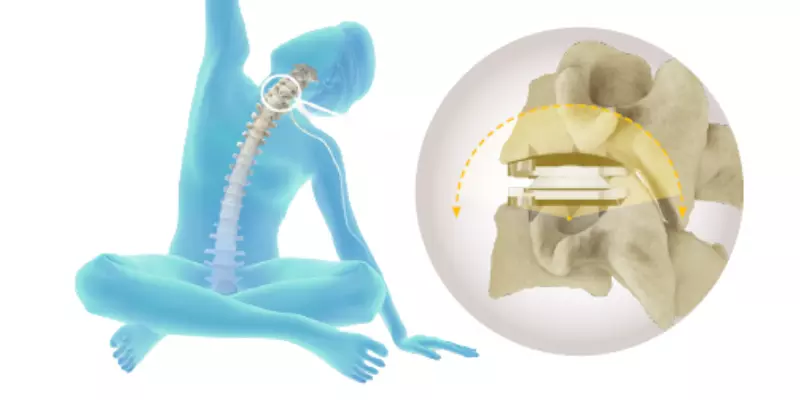
- Preserves natural spinal motion.
- Helps maintain flexibility and range of motion.
- May reduce stress on nearby discs.
- Often allows faster recovery than fusion.
- Uses a motion‑preserving implant rather than permanently locking bones together.
Cervical disc replacement (neck)
Cervical disc replacement treats damaged discs in the neck caused by conditions such as degenerative disc disease, herniated discs, and nerve compression.
During surgery, the damaged disc is removed through a small incision in the front of the neck and replaced with an artificial disc designed to allow natural motion.
- Maintains neck motion and flexibility.
- Often leads to quicker recovery.
- Minimally invasive approach.
- May lower risk of future degeneration at nearby levels.
Lumbar disc replacement (low back)
Lumbar disc replacement treats painful degeneration in the lower spine. Instead of fusing vertebrae together, the damaged disc is replaced, allowing continued movement and more natural load distribution through the spine.
- Preserves spinal flexibility.
- May reduce future surgeries on nearby discs.
- Often allows quicker return to activity.
- Helps restore spinal alignment and disc height.
Who is a candidate for disc replacement?
Disc replacement is typically considered for patients who have confirmed disc degeneration causing pain, have tried nonsurgical treatments without relief, have disease affecting one or two levels of the spine, and are otherwise in good general health.
A spine specialist will determine whether disc replacement or fusion is the best treatment based on imaging, symptoms, and overall health.
What to expect from surgery
Before surgery
- Consultation and imaging studies
- Review of medical history and symptoms
- Pre‑operative planning
During surgery
- Removal of the damaged disc
- Placement of an artificial disc implant
- Verification of proper alignment with imaging
After surgery
- Short hospital stay (sometimes same‑day discharge)
- Pain management and early movement
- Physical therapy to restore strength and flexibility
Talk with a spine specialist about your options
If neck or back pain is limiting your life and you’ve been told you may need fusion surgery, total disc replacement may be worth exploring. A spine consultation can help determine the source of your pain and whether disc replacement or fusion is the best treatment for you.