Total Disc Replacement (Artificial Disc Replacement)
A motion-preserving alternative to spinal fusion.
If you’ve been told you may need spinal fusion for neck or back pain, you may have another option. Total disc replacement (TDR) is an advanced surgical procedure designed to relieve pain while preserving the natural movement of your spine.
What is total disc replacement?
Total disc replacement, also called disc arthroplasty or artificial disc replacement, treats painful, damaged spinal discs by replacing them with a device designed to mimic the function of a healthy disc. It is a surgical alternative to spinal fusion for certain patients with damaged discs in the neck or lower back. During the procedure, the damaged disc is removed and replaced with an artificial disc designed to maintain movement between the vertebrae.
WashU Medicine orthopedic spine surgeons offer cervical and lumbar disc replacement for appropriate candidates. The goal of total disc replacement is to relieve nerve pressure, restore disc height, reduce pain, while preserving motion in the spine, helping patients return to daily activities.
What conditions can total disc replacement treat?
Total disc replacement treats damaged discs in the neck caused from degenerative disc disease, herniated discs and nerve compression.
Benefits of total disc replacement
While spinal fusion is still an effective treatment for many patients, disc replacement may offer several advantages for the right candidates.
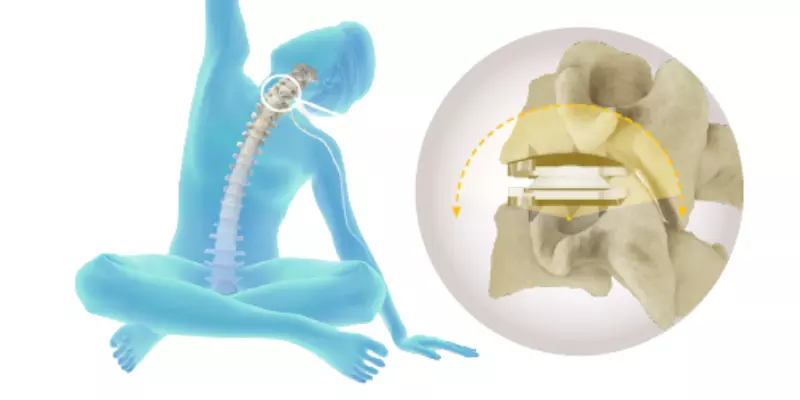
- Preserves natural spinal motion.
- Helps maintain flexibility and range of motion.
- May reduce stress on nearby discs.
- Often allows faster recovery than fusion.
- Uses a motion‑preserving implant rather than permanently locking bones together.
What's the difference between disc replacement and spinal fusion?
Both total disc replacement and spinal fusion can treat certain painful spinal conditions, but they work differently. Spinal fusion permanently joins the vertebrae above and below the damaged disc, stopping movement at that level of the spine. This helps to stabilize the spine and reduce pain. Total disc replacement removes the damaged disc and replaces it with an artificial one that allows continued motion.
Cervical vs. lumbar disc replacement
Cervical disc replacement (neck)
Cervical disc replacement treats damaged discs in the neck caused by conditions such as degenerative disc disease, herniated discs, and nerve compression.
During surgery, the damaged disc is removed through a small incision in the front of the neck and replaced with an artificial disc designed to allow natural motion.
- Maintains neck motion and flexibility
- Often leads to quicker recovery
- Minimally invasive approach
- May lower risk of future degeneration at nearby levels
Lumbar disc replacement (low back)
Lumbar disc replacement treats painful degeneration in the lower spine. Instead of fusing vertebrae together, the damaged disc is replaced, allowing continued movement and more natural load distribution through the spine.
- Preserves spinal flexibility
- May reduce future surgeries on nearby discs
- Often allows quicker return to activity
- Helps restore spinal alignment and disc height
Who is a candidate for disc replacement?
A spine specialist will determine whether disc replacement or fusion is the best treatment based on imaging, symptoms and overall health.
You may be a candidate if:
- You have confirmed disc degeneration causing pain
- Have tried nonsurgical treatments without relief
- Have disease affecting one or two levels of the spine
- Are otherwise in good general health
Who is not a candidate for total disc replacement?
Total disc replacement is not right for everyone. You may not be a candidate if you have severe arthritis in the small joints of the spine, weak bones (osteoporosis), an unstable spine or certain spine deformities. Other health or spine problems may also affect whether disc replacement is right for you. Your surgeon will review your symptoms, health and imaging to help determine the best treatment option.
What to expect from surgery
Before surgery
- Consultation and imaging studies
- Review of medical history and symptoms
- Pre‑operative planning
During surgery
- Removal of the damaged disc
- Placement of an artificial disc implant
- Verification of proper alignment with imaging
After surgery
- Short hospital stay (sometimes same‑day discharge)
- Pain management and early movement
- Physical therapy to restore strength and flexibility
What does recovery look like after total disc replacement?
Recovery is different for each person and depends on whether surgery is performed in the neck or lower back. Most patients often spend 1-2 nights in the hospital, although for cervical (neck) disc replacements it is sometimes an outpatient surgery. Most patients return to normal activities within six weeks after spine surgery. For some patients, this may take longer. Your surgeon will let you know when it is safe to drive, return to work, exercise, and take part in other activities.
Why choose WashU Medicine for total disc replacement?
Our fellowship-trained spine surgeons have expertise in total disc replacement and other advanced treatments for neck and back conditions. We offer cervical and lumbar disc replacement, with a focus on relieving pain while preserving motion in the spine whenever possible.
Frequently asked questions about total disc replacement
How long does an artificial disc last?
Artificial discs are designed to last for many years. Studies have shown that many artificial discs continue to work well for 20 years or more after surgery. However, there is no set lifespan for an artificial disc. How long it lasts can depend on the type of disc, where it is placed, a patient's lifestyle habits and other factors.
Can more than one disc be replaced?
Yes. For some patients, more than one disc can be replaced. At WashU Medicine, we offer replacement of up to two discs in the neck or lower back, which is the maximum currently approved by the FDA. Whether replacing two discs is right for you depends on which discs are damaged, the condition of your spine and other factors.
What are the risks of total disc replacement?
Like any surgery, total disc replacement has risks. These may include infection, instability, nerve injury, ongoing pain, or the need for another surgery. The artificial disc may also move, loosen, or wear over time. Your surgeon will talk with you about these risks and any risks that may be specific to your health or condition.
Can I return to sports and exercise after disc replacement?
Many patients can return to exercise and an active lifestyle after total disc replacement. Walking and light activity are often encouraged early in recovery. You can slowly increase your activity as you heal. Talk with your surgeon before returning to strenuous exercise or sports to make sure it is safe for you.
What happens if I'm not a candidate for total disc replacement?
If total disc replacement is not right for you, there are other treatment options. These may include physical therapy, medications, injections, or other forms of more conservative treatment options. If surgery is needed, spinal fusion or another type of spine surgery may be an option. Your surgeon will recommend treatment based on your condition, symptoms, and individual needs.
Talk with a spine specialist about your options
If neck or back pain is limiting your life and you’ve been told you may need fusion surgery, total disc replacement may be worth exploring. A spine consultation can help determine the source of your pain and whether disc replacement or fusion is the best treatment for you.